
Why sole traders and simple companies are often paying for more software than they need
If you’re a sole trader or running a simple Pty Ltd company, chances are someone has told you that you need Xero.
It’s become one of those default pieces of business advice.
Starting a business? Get Xero.
Registered for GST? Get Xero.
Set up a company? Definitely get Xero.
But here’s the simple truth.
You might not need it at all.
For many sole traders and simple micro companies, complex accounting software can end up being an expensive extra layer that adds more admin than value.
While Xero is an excellent platform for payroll, advanced bookkeeping, and larger business workflows, it is not automatically the right fit for every business structure.
The myth: every business needs complex accounting software
There’s a long-standing assumption that if you have an ABN or Pty Ltd company, you need full accounting software.
That advice often comes from old bookkeeping habits rather than what your business actually needs today.
Platforms like Xero are fantastic when you need:
- payroll and STP reporting
- multiple employees
- bookkeeper or accountant workflows
- chart of accounts and ledger reporting
- multi-user approvals
- inventory or project tracking
- deeper financial statements
These are all valid use cases.
But that does not apply to everyone.
The old-school advice: keep personal and business separate
For years, the standard advice has been simple:
Keep your business finances separate from your personal finances.
And to be clear, that advice is still important from a legal and operational perspective.
Separate bank accounts, separate records, and clean reporting absolutely matter.
But where the advice becomes outdated is when people assume that means they need completely separate software ecosystems as well.
As we talk about in our article Why Self Employed Accounting Software Should Do It All, the traditional approach was built around the limitations of older software.
Back then, business tools and personal finance tools lived in separate worlds.
So people were told to use one platform for business, another for personal budgeting, and then manually piece everything together.
That might have made sense years ago.
Today, it often just creates extra cost and admin.
Because your money does not actually live in silos.
Your business income affects what you can safely spend personally.
Your GST and tax obligations affect your savings and cash flow.
Director drawings, salary, and distributions all flow back into your personal position.
This is where the old-school model starts to break down.
There is a big difference between:
Keeping finances legally separate
and
Paying for multiple software subscriptions
Modern software can now keep the business activity correctly separated for reporting and tax purposes while still giving you one complete view of your financial life.
That is a much smarter way to manage money for many sole traders and simple companies.
For sole traders, it’s often overkill
If you’re a sole trader, what you often need is much simpler:
- income and expense tracking
- invoices and quotes
- bank feeds
- GST and BAS visibility
- deduction tracking
- real-time tax position
- cash flow clarity
That’s very different from needing enterprise-style accounting software.
Many sole traders end up paying a monthly subscription for features they never use, while still not having a clear view of what they actually owe.
The same goes for simple Pty Ltd companies
This is where the misconception gets even stronger.
A simple Pty Ltd company does not automatically mean you need Xero.
If your company is:
- one director
- no staff
- no payroll
- straightforward business income and expenses
- standard quarterly BAS
- no complex bookkeeping needs
then a large accounting platform may be more than you need.
For many simple companies, the real need is to:
- keep business cash flow visible
- track GST
- prepare BAS
- understand what can be paid out
- keep tax obligations clear
That doesn’t always require a full bookkeeping stack.
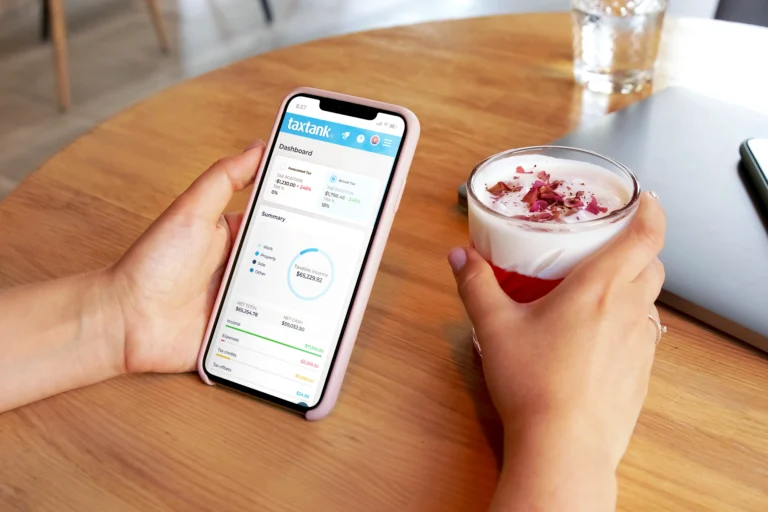
TaxTank’s recent updates even specifically support small companies without payroll or inventory, which is exactly this use case.
The hidden cost nobody talks about
The biggest cost is often not the subscription itself.
It’s the stack that builds around it.
Business owners end up paying for:
- accounting software
- bookkeeping support
- accountant fees
- payroll add-ons
- integrations they never use
For a simple business, that can quickly become unnecessary overhead.
When does Xero make sense vs when does TaxTank make sense?
The right software depends on what your business actually needs, not just your structure.
| If you need… | Xero may be the better fit | TaxTank may be the better fit |
| Payroll / STP | ✓ | |
| Multiple employees | ✓ | |
| Bookkeeper workflows | ✓ | |
| Complex ledger reporting | ✓ | |
| Inventory / project tracking | ✓ | |
| Sole trader income & expenses | ✓ | |
| BAS reporting | ✓ | |
| Live tax visibility | ✓ | |
| Personal + business money view | ✓ | |
| Director drawings visibility | ✓ | |
| Simpler cash flow management | ✓ |
The biggest difference is this:
Xero is excellent for traditional business accounting workflows.
TaxTank is built to help individuals, sole traders, and simple companies understand their real financial position in real time, including what that means for their tax obligations and personal cash flow.
Frequently asked questions
Do sole traders need Xero?
Not necessarily.
Many sole traders only need cash flow tracking, deductions, invoicing, and BAS visibility. Full accounting software can be unnecessary if payroll and advanced bookkeeping features are not required. If you’re still submitting an individual tax return, then software like TaxTank may be the better fit.
Do I need Xero for a simple Pty Ltd company?
No.
A simple Pty Ltd structure does not automatically require Xero. It depends on whether you need payroll, multiple users, or more complex accounting workflows. If you don’t, then a software like TaxTank might be the best solution.
Is it still important to keep business and personal finances separate?
Yes, absolutely.
Separate bank accounts and clean records remain best practice.
But that does not automatically mean you need separate software subscriptions.
Modern software, like TaxTank, can provide separation where required while still giving you one complete view of your financial position.
Still paying for software that’s more complex than your business?
If you’re a sole trader or running a simple Pty Ltd company, you may not need to pay for software built for payroll teams, bookkeepers, and larger business workflows.
What you need is clarity.
A clear view of:
- what money is coming in
- what needs to be set aside for GST and tax
- what is available to spend or pay yourself
- where your business and personal position actually sits
TaxTank is built to help you manage your money and tax obligations in one place, without paying for features you don’t need.
Whether you’re a sole trader, side hustler, consultant, contractor, or running a simple company, you can track income, expenses, BAS, and your live tax position all in one platform.
Start your 14-day free trial today and see your full financial position in real time.