

Table of Contents
Every new financial year brings updates to Australia’s tax system, and from 1 July 2026, several important tax changes have come into effect.
While some changes are relatively small, others could affect how much tax you pay, whether you’re required to make HELP repayments, and how you claim work-related deductions.
The biggest talking point is the introduction of the new $1,000 standard work-related deduction, but there are also changes to income tax rates, HELP debts, the cents per kilometre rate, Medicare Levy thresholds and more.
Here’s a simple guide to everything that’s changed.
Australian Tax changes at a glance (1 July 2026)
From 1 July 2026:
- Income tax rates have been reduced for many Australians.
- The HELP compulsory repayment threshold has increased.
- The cents per kilometre vehicle deduction has increased.
- Medicare Levy low-income thresholds have increased.
- Private health insurance rebate thresholds have been indexed.
- Luxury Car Tax thresholds have increased.
- The new $1,000 standard work-related deduction has commenced.
1. Lower Income Tax Rates
One of the biggest tax changes this financial year is a reduction in the tax rate applying to taxable income between $18,201 and $45,000.
The tax rate has reduced from 16% to 15%, providing a modest tax cut for millions of Australians.
Eligible taxpayers could save up to $268 over the financial year.
While it’s not a life-changing amount, every dollar counts, and the reduced tax rates will automatically apply when calculating your income tax.
2. HELP Debt Repayment Threshold Has Increased
Australians with a HELP, HECS or other study loan will also benefit from a higher compulsory repayment threshold.
From 1 July 2026, compulsory repayments don’t begin until your repayment income reaches $69,528.
If your income falls below this amount, you won’t be required to make compulsory HELP repayments during the financial year.
For those earning above the threshold, repayments continue to increase progressively as income rises.
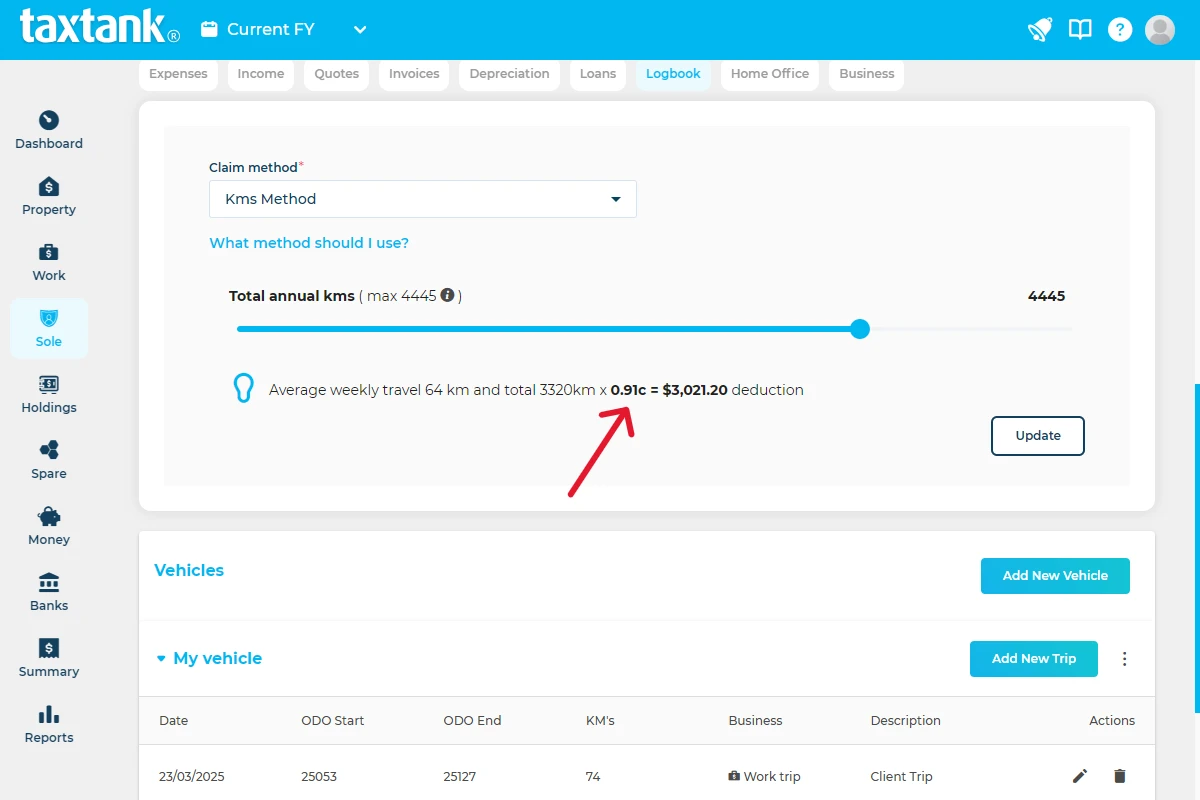
3. Car Deduction Rate Increased
If you claim work-related vehicle expenses using the cents per kilometre method, the deduction rate has increased.
The new rate is:
91 cents per kilometre
This applies to eligible work-related travel using your own vehicle.
Remember that you still need to be able to demonstrate how you calculated your business kilometres if the ATO asks for evidence.
4. Medicare Levy Thresholds Updated
As happens most years, the Government has increased the Medicare Levy low-income thresholds.
These changes help ensure lower-income Australians aren’t required to pay the levy simply because of inflation or wage growth.
The updated thresholds apply automatically when calculating your tax.
5. Private Health Insurance Thresholds Increased
The income thresholds used to determine:
- Private Health Insurance rebates
- Medicare Levy Surcharge
have also been updated through annual indexation.
These changes may affect how much rebate you’re entitled to or whether you’re liable for the Medicare Levy Surcharge.
6. Luxury Car Tax Thresholds Have Increased
The Luxury Car Tax (LCT) thresholds have also increased from 1 July.
If you’re purchasing a new vehicle above the applicable threshold, these updated limits may affect the amount of Luxury Car Tax payable.
7. The New $1,000 Standard Work-Related Deduction
This is the change receiving the most attention.
From 1 July 2026, eligible taxpayers can choose to claim a $1,000 standard work-related deduction instead of claiming individual work-related expenses.
The aim is to reduce paperwork for taxpayers with relatively small deductible expenses.
However, it’s important to understand exactly how it works before automatically choosing this option.
It’s Not a $1,000 Payment
One common misunderstanding is that the Government is giving everyone $1,000.
That’s not how the measure works.
The $1,000 is a tax deduction, not a payment.
It reduces your taxable income, and the actual tax saving depends on your marginal tax rate.
Should You Claim the Standard Deduction?
It depends.
If your legitimate work-related deductions are less than $1,000, claiming the standard deduction could save you time because you won’t need to calculate and claim each individual expense.
However, if your deductible expenses exceed $1,000, you can still claim the higher amount using your actual expenses.
Given that the average Australian claims around $2,700 in work-related deductions each year, many taxpayers may still be better off claiming their actual expenses rather than using the standard deduction.
The best approach is to compare both methods before lodging your return.
Do You Still Need Records?
Many people assume the standard deduction means record keeping disappears altogether.
Not necessarily.
If the ATO reviews your tax return, you may still need to demonstrate that you genuinely incurred deductible work-related expenses.
Supporting records could include:
- Bank transactions
- Tax invoices
- Receipts
- Diary notes
- Employer records
- Other documentation supporting your claim
Keeping good records remains one of the simplest ways to protect yourself if your return is reviewed.
What Can You Still Claim Separately?
Even if you choose the standard work-related deduction, certain deductions can still be claimed separately where you’re eligible.
These include:
- Personal deductible super contributions
- Donations to eligible charities
- Union fees
These aren’t included within the $1,000 standard deduction.
Frequently Asked Questions
What changed on 1 July 2026?
The major tax changes include lower income tax rates, higher HELP repayment thresholds, an increased cents per kilometre rate, updated Medicare Levy and private health insurance thresholds, increased Luxury Car Tax thresholds and the introduction of the $1,000 standard work-related deduction.
Is everyone eligible for the tax cut?
Most Australian taxpayers with taxable income above $18,200 will receive a tax cut from 1 July 2026.
This is because Australia’s income tax system is progressive. The tax rate on income between $18,201 and $45,000 has reduced from 16% to 15%, so anyone earning above $18,200 pays the lower rate on that portion of their taxable income, even if they earn well above $45,000.
The maximum benefit from this change is $268 per year, with the exact saving depending on your taxable income.
What is the new $1,000 standard deduction?
It’s an optional work-related deduction that eligible taxpayers can claim instead of claiming individual work-related expenses. It reduces your taxable income rather than providing a direct payment.
Can I still claim more than $1,000?
Yes. If your legitimate work-related deductions exceed $1,000, you can continue claiming your actual deductible expenses instead.
Do I still need receipts?
You may. While the standard deduction simplifies claiming, the ATO may still require evidence that deductible expenses were genuinely incurred if your return is reviewed.
Has the HELP repayment threshold changed?
Yes. From 1 July 2026, compulsory HELP repayments generally begin once your repayment income reaches $69,528.
What is the new cents per kilometre rate?
The work-related vehicle deduction rate has increased to 91 cents per kilometre for eligible travel using the cents per kilometre method.
Final thoughts
The 2026-27 financial year brings several welcome tax changes, but the new $1,000 standard work-related deduction is likely to have the biggest impact for many Australians.
While the standard deduction may simplify tax time for some people, it won’t necessarily produce the biggest tax benefit. Understanding your actual deductible expenses before choosing how to claim remains important.
With tax legislation changing every year, staying organised throughout the financial year is one of the easiest ways to maximise your deductions and avoid surprises when it’s time to lodge your return.
Stay ahead of tax changes automatically
Tax legislation changes every year.
Instead of trying to remember new tax rates, thresholds and deduction rules, TaxTank automatically updates Australian tax legislation and calculates your live tax position throughout the year.
Start your free trial today.