If you’ve searched for the best tax software in Australia recently, you’ve probably realised one thing.
There are a lot of options.
Xero. MYOB. QuickBooks. Hnry. Thriday. Etax. One Click Life. TaxTank.
The challenge is that most people compare these platforms as though they’re direct competitors.
They’re not.
It’s a bit like comparing a ute, an SUV and a sports car. They’re all vehicles, but they’re built for completely different purposes.
The same thing has happened with tax software.
Some platforms are designed to run businesses. Others help prepare your annual tax return. Some simply store receipts and records, while others manage tax administration for sole traders.
And now there’s a newer category of software that’s changing the way Australians manage their tax.
Instead of simply recording transactions or helping you lodge your tax return at the end of the financial year, these platforms apply Australian tax rules to calculate your tax position throughout the year.
At the same time, almost every provider is introducing automation and artificial intelligence to make tax software faster, easier to use and more accessible.
That’s a positive step, but AI is only part of the solution.
The more important question is this:
What is the software actually designed to do?
Because tax isn’t just information.
Tax is rules.
The best tax software doesn’t just record transactions or answer tax questions. It applies Australian tax rules correctly, helping you understand your obligations, calculate your tax position and make better financial decisions throughout the year.
In this guide, we’ll compare the major types of tax software available in Australia, explain who each one is designed for, and help you choose the solution that’s right for your circumstances.
What Australians Really Mean When They Search for Tax Software
The phrase “tax software” covers a wide range of products, but they’re often solving completely different problems.
Someone running a business with employees needs very different software from an employee wanting to maximise work-related deductions, or a property investor managing multiple rental properties.
Broadly speaking, tax software in Australia falls into five categories:
Business accounting software
Platforms such as Xero, MYOB and QuickBooks are designed to manage businesses. They handle invoicing, payroll, GST, bank reconciliation and financial reporting, making them ideal for businesses with employees and more complex accounting requirements.
Sole trader managed tax platforms
Solutions like Hnry and Thriday are built specifically for freelancers and sole traders. They’re designed around a managed-service model, where you’ll typically use a dedicated business bank account, tax is automatically set aside as you’re paid, and registered tax professionals work behind the scenes to help prepare BAS statements and annual tax returns. The goal is to reduce the amount of tax administration you need to do yourself.
Online tax return services
Providers such as Etax and One Click Life focus on preparing and lodging annual tax returns. They combine online questionnaires with registered tax agents to help Australians complete their tax return each year.
Record keeping apps
Apps like the ATO’ app and ReceiptHub by H&R Block help organise receipts, track expenses and maintain records throughout the financial year. They’re useful for keeping evidence but generally don’t calculate your tax position.
Real-time tax management software
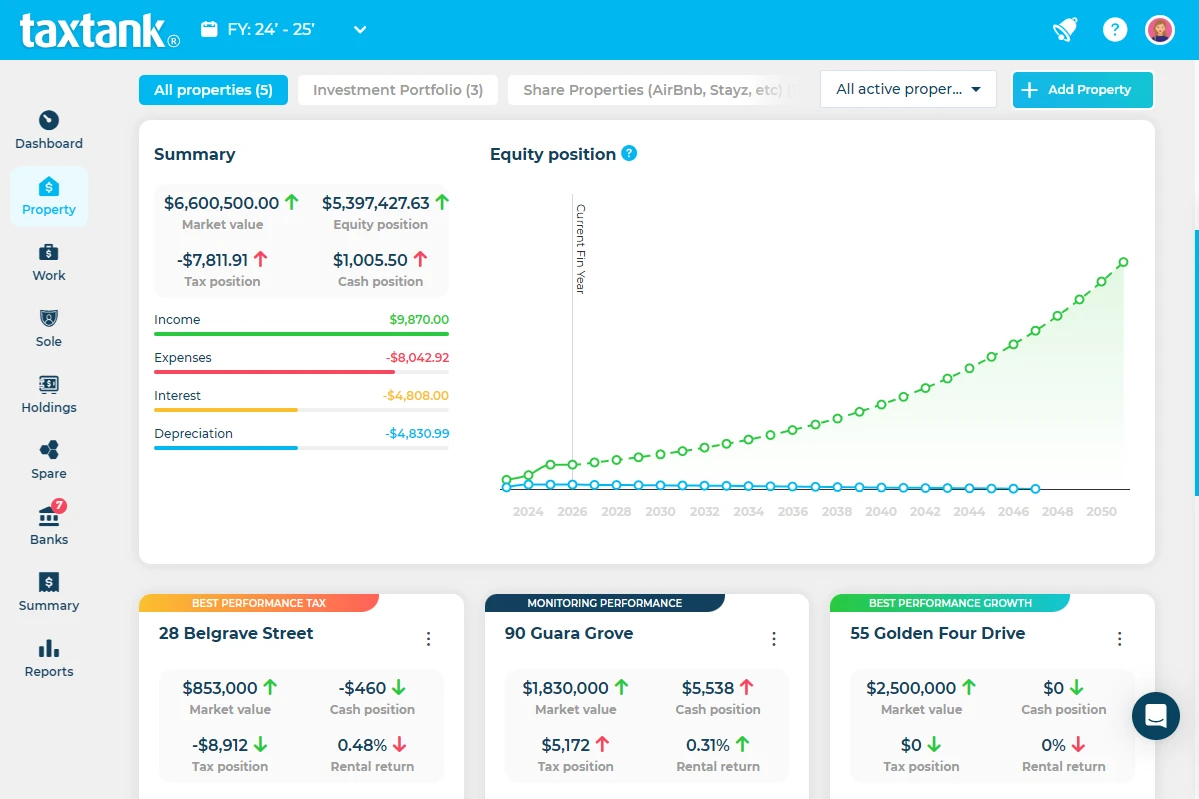
This is a newer category designed to help Australians understand their tax position before tax time arrives. Rather than simply storing information, platforms like TaxTank apply Australian tax rules to financial data throughout the year, helping users calculate tax, identify deductions and make better financial decisions.
Each category serves a different purpose, so the best tax software depends on your income sources, investment strategy and the level of visibility you want over your finances throughout the year.
If you would prefer to compare app-based options specifically, see our guide to the best tax apps in Australia.
Business Accounting Software: Best for Businesses, Not Personal Tax
When Australians think about accounting software, three names usually come to mind: Xero, MYOB and QuickBooks.
These platforms have been the backbone of Australian businesses for years, helping millions of business owners manage invoicing, payroll, GST, bank reconciliation and financial reporting. If you’re operating a company with employees, issuing invoices, lodging BAS statements and working closely with an accountant or bookkeeper, they’re excellent choices.
At their core, these platforms are designed as accounting systems.
Every transaction is recorded against a chart of accounts, allowing businesses to produce Profit and Loss statements, Balance Sheets, cash flow reports and GST reports. They’re built to keep accurate financial records and provide accountants with the information needed to prepare financial statements and tax returns.
For many businesses, that’s exactly what’s required.
The challenge is that accounting software isn’t the same as personal tax software.
While Xero, MYOB and QuickBooks can record income and expenses exceptionally well, they generally don’t calculate an individual’s Australian tax position. That’s because they’re designed to produce accounting reports, not personal tax outcomes. Understanding how those transactions affect your personal tax outcome still requires knowledge of Australian tax law or advice from your accountant.
For example, accounting software doesn’t typically determine:
Whether an expense is immediately deductible or needs to be depreciated over several years.
Which working from home calculation method produces the best outcome.
How vehicle logbook percentages affect deductible expenses.
How rental property income and expenses interact with your salary.
The capital gains tax implications of selling shares, cryptocurrency or investment property.
How Medicare Levy, HELP debt, offsets and other personal tax rules affect your final tax position.
The combined impact of multiple income sources, such as PAYG employment, sole trader income and investment income.
Instead, these platforms focus on producing accurate accounting records that can later be interpreted for tax purposes.
Another consideration is complexity.
Business accounting software is designed to support a wide range of business activities, including inventory management, payroll, timesheets, purchase orders, supplier management, multi-user access and advanced financial reporting. These are valuable features for growing businesses, but they can feel overwhelming if your primary goal is simply managing your own tax.
Pricing can also increase as your business grows. While introductory offers are common, ongoing subscription costs often rise as additional users, payroll, reporting tools or premium features are added.
For businesses with staff and complex accounting requirements, these platforms remain some of the best accounting solutions available in Australia.
However, if you’re an employee, property investor, freelancer, side hustler or someone with multiple personal income streams, you may find yourself paying for features you’ll never use while still needing separate tools or professional advice to understand your personal tax position.
Best suited to:
Companies and growing businesses
Businesses with employees and payroll
Businesses needing detailed financial reporting
Businesses with more complex accounting requirements
May not be the best fit for:
Sole traders or single operators with simple business structures
Employees claiming work-related deductions
Property investors
Individuals with multiple personal income sources
Share and cryptocurrency investors
Australians wanting real-time visibility of their personal tax position
💡 TaxTank Tip: If you’re an employee or investor using business accounting software for your personal finances, ask yourself whether you’re paying for payroll, invoicing and business reporting features you’ll never use. Software designed specifically for individuals is often simpler and more cost effective.
Managed Tax Platforms: Ideal If You Want Someone Else to Handle the Administration
Not everyone wants to think about tax.
Many sole traders and freelancers simply want to get paid, know that enough money has been set aside for tax, and have someone else take care of the administration.
That’s where managed tax platforms such as Hnry and Thriday have carved out their niche.
Rather than simply providing software, these platforms combine technology with tax administration. Depending on the provider, they can automatically set aside tax, help prepare BAS statements, manage tax payments and assist with lodging your annual tax return.
For many freelancers, that’s incredibly appealing.
Instead of worrying about how much tax to save or what needs to be lodged each quarter, much of the process happens automatically behind the scenes.
The trade-off is that you’re generally buying into their way of managing your finances.
Some platforms encourage you to receive income into nominated accounts or work within their banking ecosystem so they can automatically calculate tax and manage cash flow. For many users, that’s exactly the convenience they’re looking for.
If your priority is outsourcing much of your tax administration, managed tax platforms can be an excellent solution.
However, they’re designed around managing the administration of your tax obligations rather than giving you complete visibility over your broader financial position.
If you’re the type of person who wants to understand how buying a rental property, selling shares, claiming a vehicle expense or earning additional PAYG income affects your overall tax outcome, you may prefer software that focuses on providing real-time tax insights across all your income sources rather than primarily managing the compliance process.
Best suited to:
Sole traders wanting a hands-off approach to tax administration
Freelancers and contractors
Self-employed professionals with a single business income stream
Business owners who prefer tax administration managed for them
May not be the best fit for:
Sole traders who also have PAYG employment income
Property investors with one or more rental properties
Share or cryptocurrency investors
Australians with multiple income sources
People wanting a single, real-time view of their overall tax position
Individuals who prefer to use their existing banking arrangements and maintain full visibility over their finances
💡 TaxTank Tip: If you earn both PAYG income and sole trader income, choose software that brings both income sources into a single tax calculation. Managing each separately can make it difficult to understand your overall tax position or avoid unexpected tax bills.
Online Tax Return Software: Best for Lodging Your Tax Return
For many Australians, tax only becomes a priority once a year.
When the end of the financial year arrives, the goal is simple: gather your information, claim the deductions you’re entitled to and lodge your tax return as quickly as possible.
That’s where online tax return services such as Etax and One Click Life fit into the market.
Rather than managing your finances throughout the year, these platforms focus on preparing and lodging your annual tax return. Most guide you through an online questionnaire, import available ATO information and have a registered tax agent review and lodge your return on your behalf.
For straightforward tax returns, this can be an affordable and convenient option. Pricing generally starts from around $80 to $150, depending on the complexity of your return and the level of support required.
Many online tax agents have also introduced AI-powered features to help identify potential deductions, explain tax concepts and make the lodgement process faster.
While these tools can be incredibly helpful, they should be treated as prompts rather than answers. Just because a deduction is commonly claimed by someone in your occupation doesn’t mean you’re automatically entitled to claim it. You must still satisfy the ATO’s eligibility rules and be able to substantiate your claim if asked.
They’re also still centred around a once-a-year event.
The majority of the work happens after the financial year has ended.
That means you generally won’t know:
How much tax you’re likely to owe throughout the year.
Whether you’re keeping enough money aside for your tax bill.
How purchasing equipment or making additional super contributions could affect your tax outcome.
Whether you’re maximising your work-related deductions before 30 June.
How changes to your income, investments or business activities are affecting your overall tax position.
By the time you receive your tax estimate or lodge your return, many financial decisions have already been made.
💡 TaxTank Tip: The best time to reduce your tax bill is before 30 June, not after it. Year-round visibility gives you time to make informed decisions while there are still opportunities available.
For Australians whose priority is simply lodging an accurate tax return each year, online tax agents remain an excellent solution.
However, if you’d prefer to understand your tax position as your financial circumstances change throughout the year, you’ll need software that’s designed for ongoing tax management rather than annual tax preparation.
For many Australians with straightforward tax affairs, lodging once a year may be all that’s needed. The limitation is that opportunities to reduce tax are often identified after the financial year has ended, when many decisions can no longer be changed.
Best suited to:
Employees with straightforward tax returns
Individuals who only think about tax at the end of the financial year
Australians who prefer a registered tax agent to prepare and lodge their return
People looking for an affordable annual tax return service
May not be the best fit for:
People wanting year-round tax visibility
Sole traders managing ongoing tax obligations
Property investors with changing deductions
Individuals making financial decisions before tax time
Australians who want to calculate their tax position throughout the year
Receipt Tracking and Record Keeping Apps: Great for Staying Organised
One of the biggest challenges at tax time isn’t calculating your deductions.
It’s remembering them.
Receipts fade, invoices get buried in emails, and it’s easy to forget expenses you’ve incurred months earlier. That’s why receipt tracking and record keeping apps have become increasingly popular with employees, sole traders and property investors alike.
Two of the best-known options in Australia are the ATO app and ReceiptHub by H&R Block.
Both are designed to help you keep accurate records throughout the financial year by storing receipts, recording expenses and organising supporting documentation in one place. Instead of searching through your wallet or inbox in July, everything is already captured and ready when it’s time to prepare your tax return.
The ATO app also allows users to record work-related trips, vehicle journeys, income and deductions before exporting the information to their tax return or registered tax agent.
These tools are excellent for improving record keeping and reducing the risk of missing deductible expenses.
However, it’s important to understand what they don’t do.
Record keeping apps are designed to collect information, not interpret it.
They generally won’t tell you:
Whether an expense is actually deductible.
Which tax rules apply to your circumstances.
How a deduction affects your tax refund or tax payable.
Whether you’ve chosen the most appropriate claim method.
How different income sources interact for tax purposes.
Whether you’re likely to receive a refund or have tax to pay at the end of the financial year.
In other words, they answer the question, “What did I spend?”
They don’t answer the much more important question, “What does that mean for my tax?”
💡 TaxTank Tip: Keeping receipts is only half the job. The real value comes from understanding whether those expenses are deductible and how they affect your overall tax position.
For many Australians, receipt tracking apps work well alongside other tax software. They help ensure nothing is forgotten, while more comprehensive tax platforms apply the relevant tax rules and calculate the bigger picture.
Best suited to:
Employees wanting to keep better tax records
Sole traders organising receipts and invoices
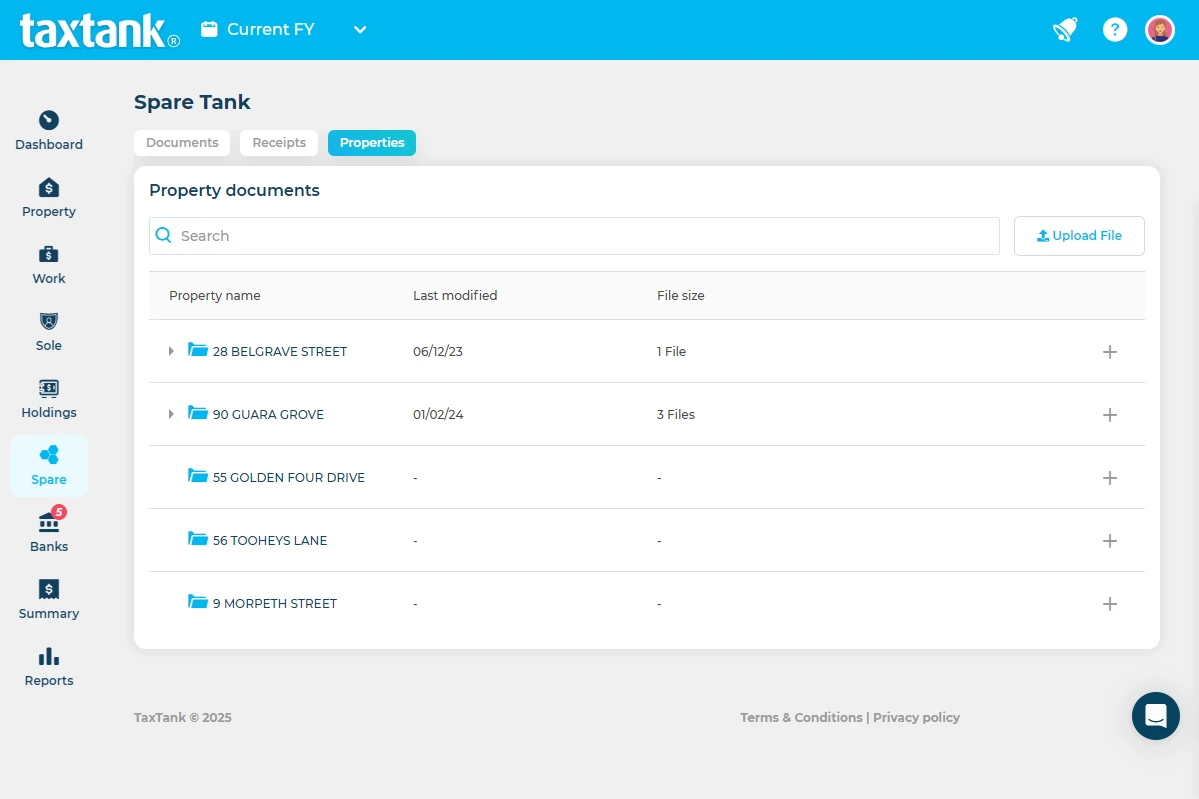
Property investors storing supporting documents
Anyone wanting to reduce paperwork at tax time
May not be the best fit for:
Australians wanting real-time tax calculations
People needing guidance on Australian tax rules
Individuals wanting to understand their overall tax position throughout the year
Real-Time Tax Management Software: The Next Generation of Tax Software
For years, tax software has fallen into one of two categories.
It either helped you keep records throughout the year, or it helped you lodge your tax return at the end of the financial year.
What it didn’t do was answer one simple question:
“Where do I stand right now?”
That’s where a new generation of tax software is changing the way Australians manage their finances.
Rather than waiting until July to understand your tax position, real-time tax management software applies Australian tax rules to your financial information throughout the year, helping you understand how your day-to-day financial decisions affect your overall tax outcome.
Instead of simply recording transactions, it turns financial data into meaningful tax insights.
TaxTank was built specifically for this purpose.
Unlike traditional accounting software, which focuses on producing financial reports, or online tax agents, which concentrate on preparing annual tax returns, TaxTank helps Australians understand their tax position every day of the year.
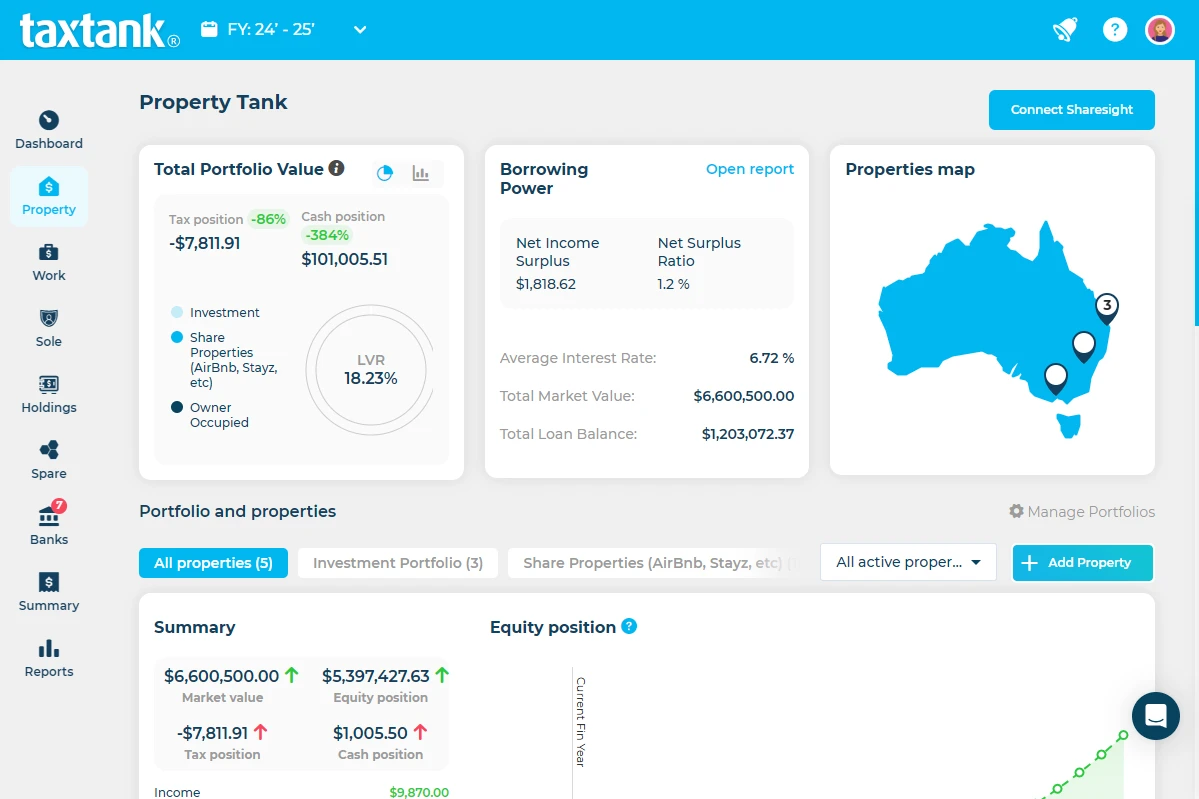
As new transactions flow into TaxTank through secure Open Banking, the software automatically categorises them, applies Australian tax rules and updates your tax position, giving you an up-to-date view of where you stand throughout the financial year.
That means you’re no longer waiting until tax time to find out whether you’ll receive a refund or have tax to pay.
You can see how your decisions affect your tax position while there’s still time to do something about it.
💡 TaxTank Tip: Small financial decisions made throughout the year can have a significant impact at tax time. Seeing those impacts in real time makes it much easier to plan ahead rather than reacting after the financial year has ended.
Imagine checking your tax position before making a financial decision instead of after the financial year has ended.
Buying another investment property.
Starting a side business.
Selling shares.
Purchasing a new laptop for work.
Making an extra super contribution before 30 June.
Rather than guessing how those decisions might affect your tax, real-time tax management software helps you understand the impact while there’s still time to act.
Built for Real Life, Not Just One Income Source
Very few Australians fit neatly into a single category anymore.
You might work full-time while running a weekend business.
Own an investment property while investing in shares.
Receive dividend income, cryptocurrency gains or foreign income alongside your salary.
Traditional software often treats each of these activities separately.
TaxTank brings them together.
Because your tax return brings them together.
Whether your income comes from employment, sole trader activities, investment properties, shares, cryptocurrency or overseas sources, TaxTank helps you understand your overall tax position in one place.
Australian Tax Rules Built Into the Software
Keeping records is important.
Applying the correct tax rules is what actually matters.
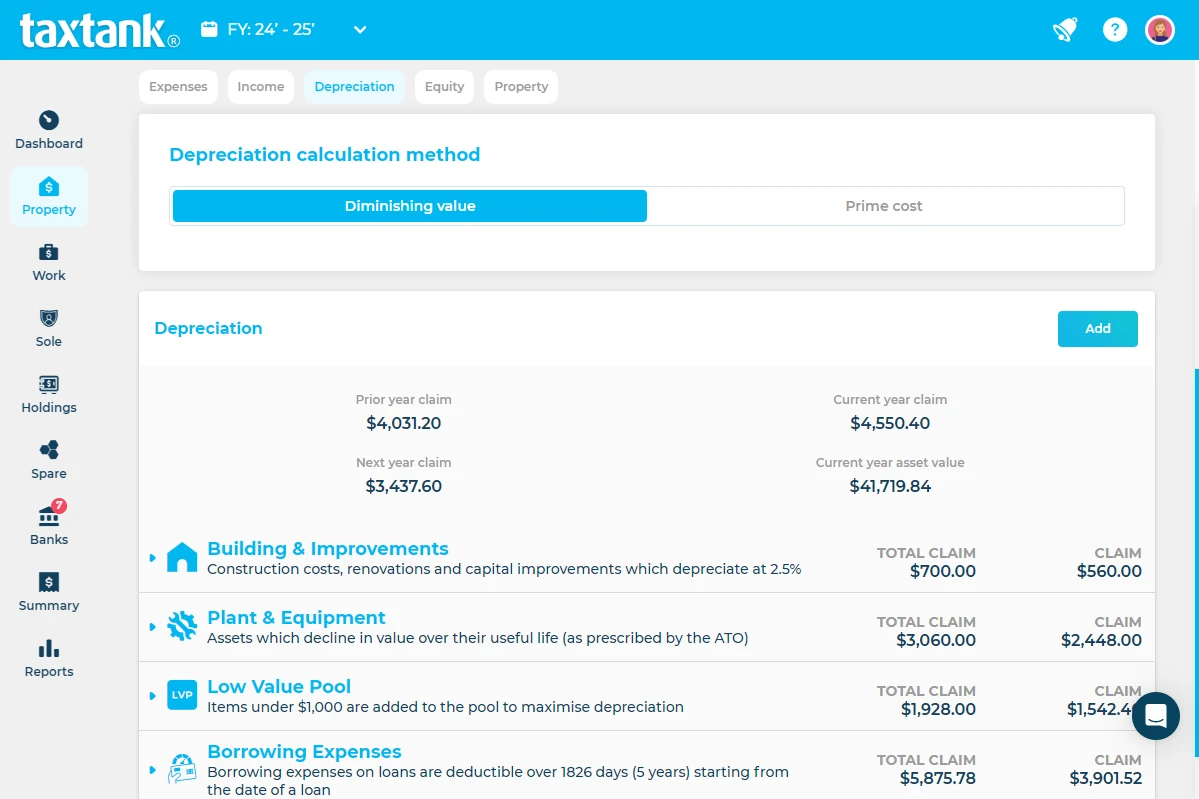
TaxTank has been designed specifically around Australian tax legislation, helping automate many of the calculations that Australians traditionally manage using spreadsheets or manual calculations.
Depending on the Tanks you choose, TaxTank can help manage:
As tax rules change, the software is updated to reflect current Australian legislation, helping reduce the need to manually interpret complex tax changes yourself.
Designed Around Individuals, Not Businesses
One of the biggest differences between TaxTank and traditional accounting software is who it’s built for.
Accounting software is designed to help businesses produce financial reports.
TaxTank is designed to help individuals understand their tax.
That distinction matters.
Instead of navigating charts of accounts, journals, payroll modules and business reporting, TaxTank focuses on the information that matters to individual taxpayers.
How much tax are you likely to pay?
What deductions have you claimed?
How are your investments performing?
Are you on track financially?
What happens if you buy another investment property?
How does additional business income affect your tax?
How much could you save by making an extra super contribution before 30 June?
These are the questions most Australians actually want answered.
TaxTank helps you see…
TaxTank helps you see…
Will I owe tax?
Your calculated tax position
Can I afford another investment?
The potential tax impact
Am I claiming enough?
Eligible deductions as you go
How much should I save?
Real-time savings
What happens if I earn more income?
Updated tax calculations
Modular Pricing That Grows With You
Not everyone needs the same features.
Someone claiming work-related deductions has very different requirements from a property investor with multiple rental properties or a sole trader managing GST obligations.
Instead of paying for a large accounting platform packed with features you may never use, TaxTank allows you to subscribe only to the areas relevant to your financial situation.
Whether you’re managing employment income, rental properties, a sole trader business or investment portfolios, you can build a solution that grows with you over time.
With pricing starting from just $6 per month, it’s one of the most affordable ways to gain year-round visibility over your tax and finances.
Best Suited To:
TaxTank is ideal for Australians who want more than basic record keeping or an annual tax return.
It’s particularly well suited to:
Employees claiming work-related deductions
Sole traders and side hustlers
Property investors
Share investors
Cryptocurrency investors
Individuals with multiple income sources
Australians earning both PAYG and self-employed income
People wanting to manage their tax throughout the year instead of waiting until tax time
Anyone looking to better understand their overall financial position
Ultimately, the best tax software isn’t necessarily the one with the longest feature list.
It’s the one that helps you make better financial decisions.
For Australians who want to understand their tax position before the end of the financial year, rather than after it, that’s exactly what TaxTank was designed to do.
Why TaxTank Is Different
Most tax software…
TaxTank…
Records transactions
Calculates your live tax position
Focuses on one income type
Combines multiple income sources
Helps at tax time
Helps all year round
Tracks receipts
Applies Australian tax rules
Built for businesses
Built for individuals
Reports on the past
Helps you make future decisions
Why Tax Software Is Changing
The way Australians earn money has changed dramatically over the past decade.
Not long ago, many people had a single employer, one PAYG income and a relatively straightforward tax return.
Today, it’s common to have multiple income streams.
You might work full-time while running an online business on weekends. Own one or more investment properties. Invest in shares, ETFs or cryptocurrency. Receive dividend income, foreign income or government payments. Or earn money from freelancing, content creation or the sharing economy.
Each income source comes with its own tax rules, deductions and reporting requirements.
The challenge is that most software was built to solve just one part of that picture.
Accounting software focuses on businesses.
Managed tax platforms focus on sole traders.
Online tax agents focus on annual tax returns.
Receipt apps focus on record keeping.
Very few platforms bring everything together to help Australians understand their complete tax position throughout the year.
As personal finances become more complex, many Australians are looking beyond traditional accounting software and annual tax return services towards solutions that provide year-round visibility.
Instead of asking, “What happened last financial year?”, they’re asking, “Where do I stand today?”
That’s exactly where real-time tax management software is changing the way Australians approach tax.
Which Tax Software Is Right for You?
Choosing the best tax software isn’t about finding the platform with the most features. It’s about finding the one that’s designed for the way you earn your income and manage your finances.
The table below provides a quick guide to help you narrow down the best option based on your circumstances.
If you’re…
Recommended software
Why it’s a good fit
Employee claiming work-related deductions
TaxTank
Calculates deductions, tracks tax in real time, vehicle logbook, working from home and depreciation.
Employee with investment properties
TaxTank
Combines employment income, rental properties and tax calculations in one place.
Employee with sole trader/side hustle income
TaxTank
Combines employment income, sole trader business income and tax calculations in one place.
Sole trader wanting a complete hands-off experience
Hnry or Thriday
Designed to automate tax administration, BAS and tax payments.
Sole trader wanting complete visibility over tax
TaxTank
Brings business and personal tax together with real-time tax calculations.
Property investor
TaxTank
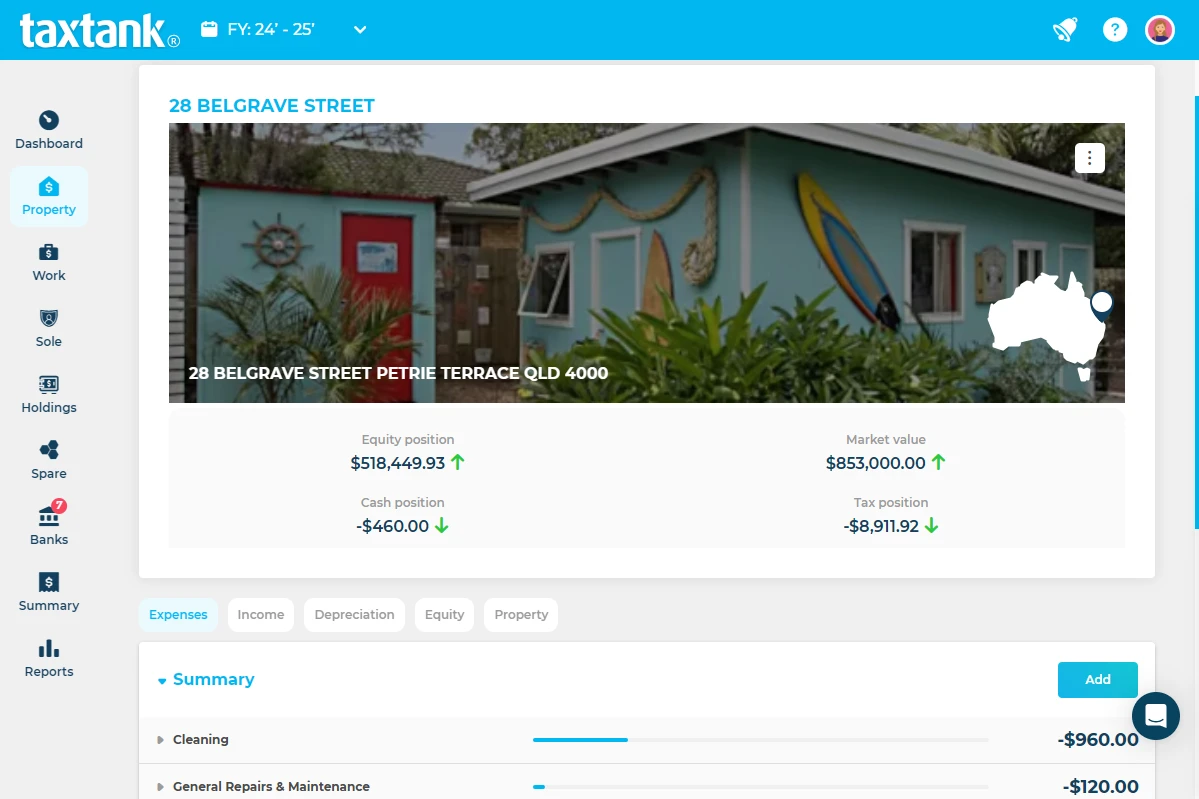
Rental income, deductions, depreciation, CGT and portfolio management.
Share or cryptocurrency investor
TaxTank
Tracks capital gains tax alongside your broader tax position.
Business with employees
Xero, MYOB or QuickBooks
Payroll, invoicing, BAS and financial reporting.
Someone who only needs a tax return once a year
Etax, One Click Life or other
Registered tax agent lodgement and annual tax return preparation.
Someone who simply wants to store receipts
MyDeductions or ReceiptHub
Record keeping and document storage.
While several of these platforms are excellent within their own category, they’re designed to solve different problems. Understanding what each product is built to do will help you choose software that supports your financial goals, rather than paying for features you don’t need.
💡 TaxTank Tip: Property investors often focus on rental income and expenses, but it’s the interaction between depreciation, borrowing costs, capital works, capital gains tax and your other income that determines your overall tax outcome.
Tax Software Comparison: Features at a Glance
Not all tax software offers the same functionality. Some are designed for business accounting, while others focus on tax lodgement or record keeping. TaxTank takes a different approach by helping individuals understand their tax position throughout the year.
Feature
TaxTank
Xero / MYOB / QuickBooks
Hnry / Thriday
Etax / One Click Life
MyDeductions / ReceiptHub
Real-time tax position
✅
❌
Limited
❌
❌
Built for Australian individuals
✅
❌
Sole Trader only
✅
✅
Employment deductions
✅
Manual
Limited
During tax return
Record only
Sole trader income
✅
✅
✅
During tax return
Record only
Rental property management
✅
Limited
❌
During tax return
Record only
Shares and capital gains tax
✅
❌
❌
During tax return
❌
Cryptocurrency tax
✅
❌
❌
Limited
❌
Vehicle logbook management
✅
❌
Limited
Limited
Basic records
Working from home deductions
✅
❌
Limited
During tax return
Records only
Multiple income sources
✅
Limited
Limited
At lodgement
❌
Open Banking transaction imports
✅
Direct Integrations
Platform dependent
❌
❌
Budgeting and cash flow
✅
Business reporting
Limited
❌
❌
Ongoing tax planning
✅
❌
Limited
❌
❌
Uses Australian tax rules
✅
Manual
Sole Trader only
At tax time
❌
💡 TaxTank Tip: Before comparing features, ask yourself one question: What problem am I actually trying to solve? If you need payroll and invoicing, business accounting software may be the answer. If you simply want your tax return lodged, an online tax agent may be enough. But if you want to understand your tax position throughout the year, you’ll need software that’s built for ongoing tax management.
The best platform depends on what you’re trying to achieve. If your goal is business accounting, Xero, MYOB or QuickBooks remain outstanding options. If you simply need an annual tax return, online tax agents provide an affordable solution. However, if you want to understand your tax position throughout the financial year, real-time tax management software fills a gap that traditional tax software was never designed to address.
Frequently Asked Questions
What is the best tax software in Australia?
There isn’t one answer for everyone. Businesses with employees often choose Xero, MYOB or QuickBooks for accounting, while online tax agents focus on preparing annual tax returns.
If you’re looking for software that actively calculates your personal tax position throughout the year, TaxTank is purpose-built for Australian individuals. Rather than simply tracking income and expenses, it applies Australian tax rules to calculate your tax live throughout the year, helping you make better financial decisions before the end of the financial year.
Is Xero good for personal tax?
Xero is an excellent accounting platform for businesses, but it wasn’t designed as personal tax software. While it records income and expenses, individuals generally still need to apply Australian tax rules themselves or work with an accountant to prepare their tax return.
Can I use MYOB or QuickBooks for my own tax return?
Yes, but they’re primarily business accounting platforms. They help organise your financial records, although they don’t generally calculate your personal tax position or calculate your individual tax throughout the year.
What is the best tax software for sole traders?
That depends on how you prefer to manage your tax. Managed tax platforms such as Hnry and Thriday are designed for sole traders who want much of the administration handled for them. TaxTank is different. It doesn’t just track sole trader income and expenses. It combines your business income with your PAYG income, deductions and other financial activity, then applies Australian tax rules to calculate your live tax position in real time.
Which tax software is best for property investors?
Property tax is becoming increasingly complex, with changing legislation, evolving negative gearing rules, capital gains tax, depreciation, borrowing costs and different ownership structures all affecting your tax outcome. Choosing software that simply records transactions often means you’re left to interpret those rules yourself.
TaxTank takes a different approach by applying Australian tax rules to your property data, calculating how each investment contributes to your overall tax position and updating as legislation changes. The result is a simpler way to manage even the most complex property portfolios.
Can tax software calculate capital gains tax?
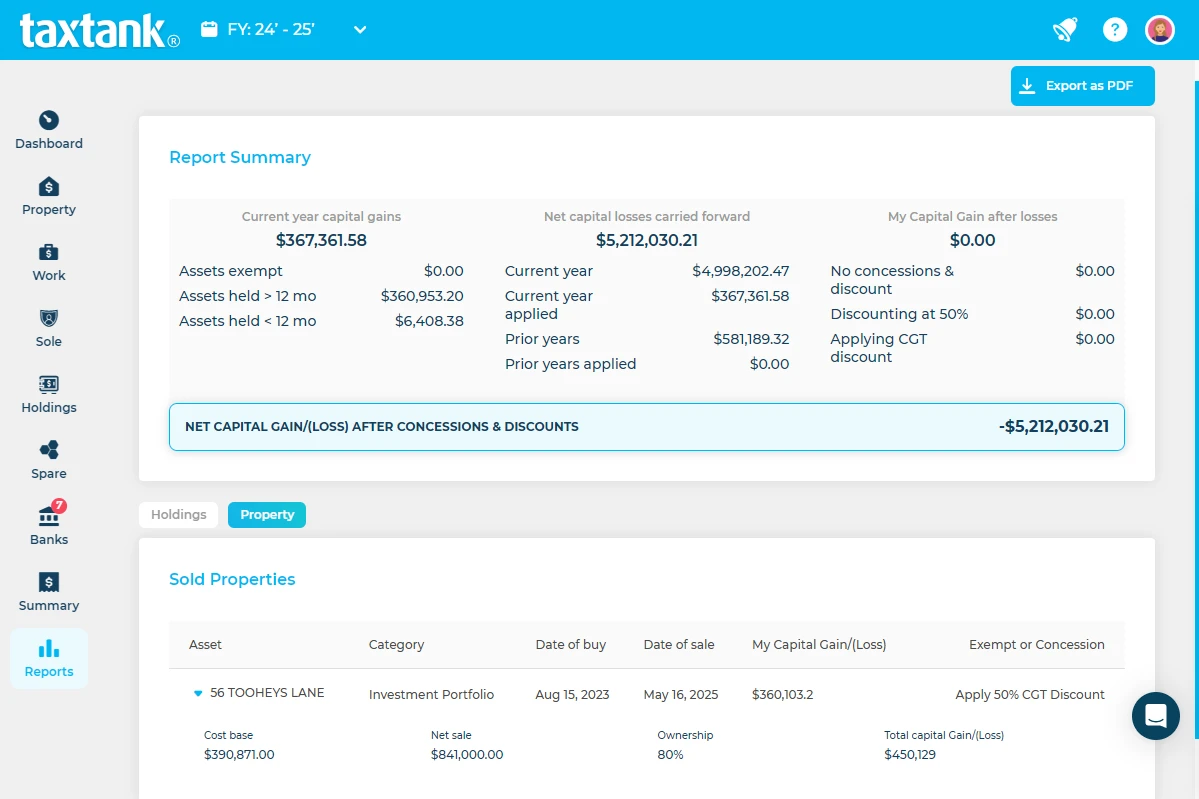
Some software can. Many accounting platforms don’t calculate personal capital gains tax automatically, particularly across different investment types. TaxTank includes capital gains tracking for eligible investments, helping investors understand the tax impact of buying and selling assets.
Can tax software replace an accountant?
Tax software and accountants perform different roles. Software helps automate calculations, organise financial information and improve visibility throughout the year, while accountants provide professional advice and prepare complex tax returns when required. Many Australians use both together.
Is AI accurate for tax advice?
AI can be extremely helpful for explaining tax concepts and answering general questions, but it relies on the quality of the information and rules behind it. Australian tax law changes regularly, so it’s important to use software that applies current tax legislation rather than relying solely on generic AI responses.
Does TaxTank support multiple income sources?
Yes. TaxTank is designed to help Australians manage employment income, sole trader income, rental properties, shares, cryptocurrency and other investments within a single platform, providing an overall tax position throughout the financial year.
What tax software do accountants recommend?
Accountants often recommend different software depending on your circumstances. Businesses commonly use accounting platforms such as Xero, MYOB or QuickBooks, while individuals benefit from software designed specifically for personal tax management. Many accountants also encourage clients to keep accurate records throughout the year so tax time is faster and more accurate.
Conclusion
Choosing the best tax software isn’t about finding the platform with the longest feature list. It’s about choosing software that’s built for the way you manage your money.
If you’re running a business with employees, accounting software like Xero, MYOB or QuickBooks remains an excellent choice.
If you want someone else to handle much of your tax administration, managed platforms like Hnry or Thriday may be the right fit.
If your focus is lodging an annual tax return, online tax agents provide an affordable and convenient option.
If you simply need somewhere to store receipts and records, apps like MyDeductions and ReceiptHub can make tax time much easier.
But if you want to understand your tax position throughout the year, see how financial decisions affect your tax before 30 June and manage multiple income sources in one place, real-time tax management software offers a fundamentally different approach.
TaxTank was built specifically for Australians who want year-round visibility, smarter tax planning and confidence that Australian tax rules are being applied as their financial situation evolves.
Tax software shouldn’t just help you lodge a tax return.
It should help you make better financial decisions every day of the year.
That’s the difference between recording your finances and understanding them.
That’s the future of tax software.
Ready for a Different Type of Tax Software?
By now, you’ve probably realised that not all tax software is designed to do the same job.
Some platforms help businesses manage their accounts.
Some prepare and lodge tax returns.
Some simply keep your receipts organised.
TaxTank was built to solve a different problem.
Instead of just recording transactions, TaxTank applies Australian tax rules to calculate your estimated tax position throughout the year, giving you the confidence to make better financial decisions before tax time arrives.
Whether you’re an employee, sole trader, property investor or managing multiple income sources, TaxTank brings everything together into one live tax calculation, so you always know where you stand.
Most tax software tracks transactions. TaxTank calculates tax.
Start your free 14-day trial today and experience the next generation of Australian tax software.
There is a version of tax management that has survived for decades. Spend the year largely ignoring the details. Gather whatever you can find at tax time. Hand it over to your accountant, or open
Managing your investment property finances is no small task. Between tracking rental income, mortgage interest, depreciation, maintenance, and tax implications, it’s easy to lose clarity without the right property accounting tools. That’s where property accounting
TaxTank is the best accounting software for sole traders in Australia who want everyday business tools connected with their live individual tax position. Sole Tank brings together income and expense tracking, quotes, invoices, business assets,