

For years, the standard advice has been simple. Use a self employed accounting software for business. Use a budgeting tool for personal finances. Keep everything separate.
That thinking is so old school.
It came from a time when software was limited. Accounting tools were built for accountants. Budgeting apps were built for households. If you were self-employed, a sole trader, an employee with side income, or a property investor, you were told to run two systems side by side and make them work together yourself.
Today, that approach creates more work than clarity.
Your money doesn’t live in silos
If you earn anything beyond a standard salary, your financial life is connected.
Business income affects personal spending. Tax obligations affect savings. Investment income changes cash flow. A strong month in your business might mean more tax to set aside. A quiet month might mean adjusting personal spending.
It is all part of the same story.
When you use two separate tools, your software splits what is naturally connected. You become the one stitching everything together. You jump between dashboards. You reconcile totals. You double check which number is right.
That is not simplicity. That is friction.
Separation sounds responsible, but it creates admin
The idea of keeping business and personal finances in different apps sounds organised. In practice, it often means:
- Two subscriptions
- Two sets of categories
- Two reporting systems
- Two places for errors
You export reports from one tool and compare them with another. You manually allocate transactions twice. You worry that something has not synced correctly.
The time cost is real. So is the risk of mistakes.
Separation was once necessary because tools could not do both jobs well. That is no longer the case.
What most people actually need
Whether you are a sole trader, employee with a side hustle, or property investor, you usually want to know four things:
- What is coming in
- What is going out
- What do I owe in tax
- What can I safely spend
That requires one complete view of your money. Not two partial views with different logic.
You do not just want a simple profit and loss report. You want to know how your self employed income also impacts your personal cash flow. You do not just want a spending breakdown. You want to know how that spending affects your next tax bill.
That only works when everything sits in one system.
Why one platform now makes sense
Modern software can handle personal cash flow, business reporting, and tax forecasting together.
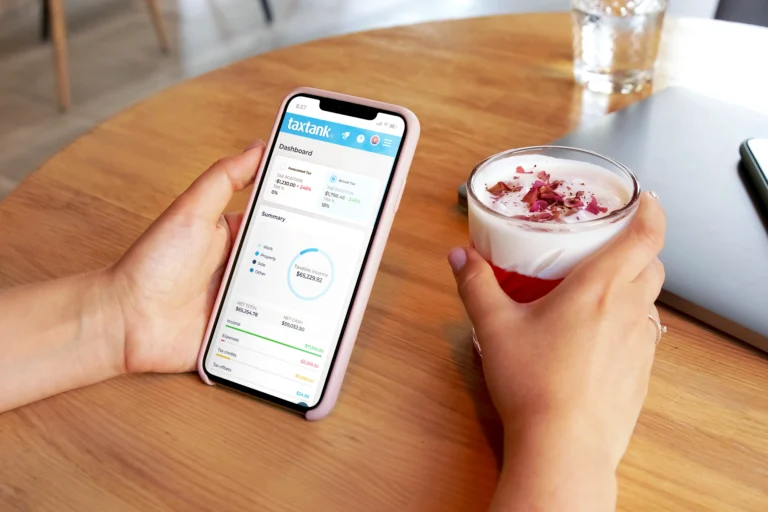
TaxTank was built around that idea.
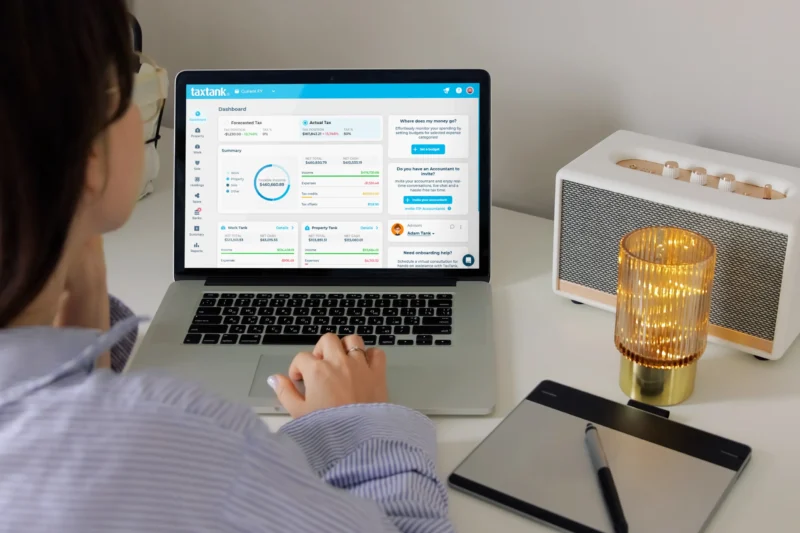
Instead of forcing you into separate “business” and “personal” modes, TaxTank connects your bank feeds, categorises transactions, and shows you:
- A full view of income and expenses
- Real time tax estimates
- Business reports tailored to self employed sole traders
- Cash flow insights that reflect your whole financial life
- Forward projections so you can plan ahead
Your data lives in one place. Your cash flow flows directly into tax planning. Your business activity informs your personal decisions automatically.
There is no need to reconcile two different systems. There is no need to guess which dashboard tells the true story.
Less software. More clarity.
When you move from two tools to one, you:
- Reduce admin
- Lower subscription costs
- Cut down on errors
- Make better decisions faster
Being self employed already means wearing multiple hats. You do not need to be your own integration layer between a budgeting app and self employed accounting software as well.
Keeping things separate used to be the responsible approach. Now it is often just unnecessary complexity.
If your income streams overlap, your software should reflect that. You do not need self employed accounting software and a budgeting tool to manage your money anymore.
You need one place that understands the full picture.
You need TaxTank.
Take control of your money in one place. Sign up for TaxTank today and see how effortless managing your business, personal finances, and taxes can be. Start your free trial now.