

To calculate tax on ABN income as a sole trader, subtract eligible business deductions from your business income, then combine the resulting profit with your other taxable income. Your ABN tax calculation uses individual income tax rates, with relevant offsets, levies and study loan repayments also affecting the result.
There is no separate ABN tax rate. Whether you freelance full-time, run several businesses or earn extra income alongside a job, your sole trader income forms part of your individual tax return.
Work out how your ABN income affects your tax, including income from your job. The examples below show how business deductions, salary and tax already paid fit into the calculation, so you can understand what to put aside.
This guide explains the calculation using the 2026–27 financial year, from 1 July 2026 to 30 June 2027.
Want to calculate your own numbers?
Use our free ABN tax calculator below for a calculation based on your inputs. Check the financial year and what the tool includes before interpreting the result.
ABN tax calculator
See how your business income, salary and deductions affect your calculated tax. Enter annual amounts in Australian dollars.
For adults who are Australian tax residents for the full year, single with no dependants. Family, pensioner and Medicare exemption rules are not included.
What this calculator includes
Resident individual income tax, low income tax offset (LITO), standard single-person Medicare levy, Medicare levy surcharge for your stated hospital cover, HELP repayment and tax payments entered. Reportable super and investment losses affect income tests, not the surcharge base. Calculations use annual whole-dollar income figures; outputs show cents and may differ from ATO assessment rounding.
It does not calculate GST, business-loss eligibility, the small business income tax offset, SAPTO, family reductions, Medicare exemptions, foreign tax offsets, private health rebate adjustments, special lump sums, FHSS adjustments or other study loan types. Business deductions above business income require a separate review and will not produce a result. Personal services income and special tax rules may change your outcome.
2026–27 Medicare low-income results are provisional and use the latest published threshold. Sources checked 12 October 2026.
If you also have a job, read the salary-plus-ABN example below first. It shows why business profit needs to be considered alongside your salary and why tax already withheld matters.
Example: calculating tax on salary plus ABN income
Priya earns an $80,000 salary and also does freelance work through her ABN. Her freelance business earns $30,000, with $10,000 in eligible deductions.
Her business profit is $20,000. Combined with her salary, her taxable income is $100,000, assuming no other income or deductions.
| Calculation | Salary only | Salary plus ABN profit |
|---|---|---|
| Taxable income | $80,000 | $100,000 |
| Income tax before offsets | $14,520 | $20,520 |
| Medicare levy at 2% | $1,600 | $2,000 |
| Combined income tax and Medicare levy before offsets | $16,120 | $22,520 |
In this simplified example, the extra $20,000 of business profit increases income tax and Medicare levy by $6,400, or 32% of that profit.
Priya does not receive a second tax-free threshold for her business. Her business profit sits on top of her salary in the annual calculation.
The example assumes full-year adult Australian tax residency and the full Medicare levy. It excludes offsets, study loan repayments, any Medicare levy surcharge and other adjustments. Employment tax withheld and PAYG instalments reduce the amount remaining payable.
This is why calculating tax on the $20,000 business profit by itself would give Priya a misleading picture.
Keep both income sources in view
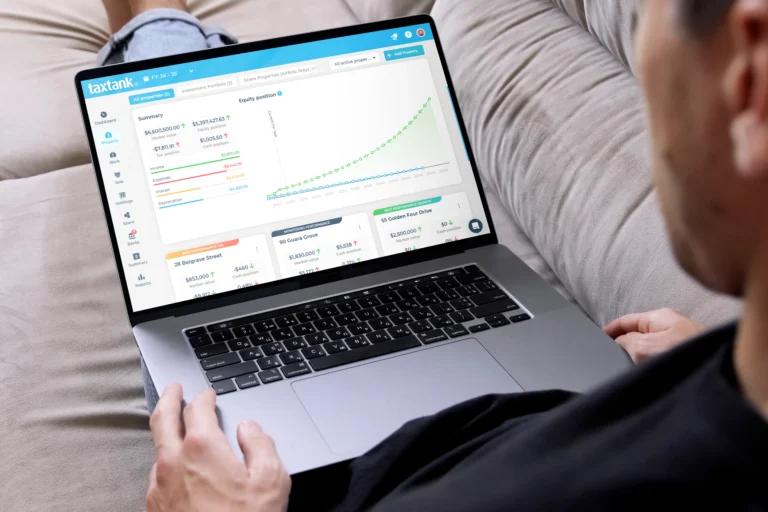
As your salary or freelance earnings change, the amount you need to put aside can change too. TaxTank brings the employment information recorded in Work Tank and business activity recorded in Sole Tank into one live individual tax summary.
Explore TaxTank for employment and sole trader income
How to calculate ABN tax step by step
1. Work out your business income
Start with the assessable income from your sole trader activities for the financial year. This may include client payments, sales, commissions and other business earnings.
If you are registered for GST, GST collected on sales is generally excluded from your income tax calculation. The timing of when income is recognised also depends on the accounting method appropriate for your business.
2. Subtract eligible business deductions
Deduct the expenses you are entitled to claim for earning that business income. For costs that serve both business and personal purposes, claim only the eligible business portion.
Buying an asset does not always mean its full cost is immediately deductible. Depreciation or an available write-off may determine the amount you can claim that year.
Business income − eligible business deductions = net business profit
Keep records of how you calculated deductions, including receipts and evidence of business use.
3. Include your other income and deductions
Combine your net business profit with other assessable income, such as salary, bank interest or investment income. Allow for any other eligible deductions to arrive at your total taxable income.
If you make a business loss, special rules may affect whether you can offset it against salary or other income. Do not automatically subtract every business loss from your wages.
4. Calculate tax and relevant adjustments
Apply the individual income tax rates for your financial year and residency status. Then account for relevant tax offsets, the Medicare levy, any Medicare levy surcharge and compulsory study loan repayments.
Eligible sole traders may qualify for the small business income tax offset. It can reduce income tax by up to $1,000, subject to the ATO’s eligibility and calculation rules. It is not a flat $1,000 reduction for every ABN holder.
5. Account for tax already paid
Your total annual tax calculation is different from the amount you still need to pay.
Tax withheld from your salary and PAYG instalments already paid are credited when your return is assessed. After those credits and other adjustments, the result may be an amount payable or a refund.
ABN tax rates for 2026–27
Sole traders who are Australian residents for tax purposes use the following individual income tax rates for 2026–27.
| Taxable income | Income tax payable before offsets |
|---|---|
| $0–$18,200 | Nil |
| $18,201–$45,000 | 15 cents for each $1 over $18,200 |
| $45,001–$135,000 | $4,020 plus 30 cents for each $1 over $45,000 |
| $135,001–$190,000 | $31,020 plus 37 cents for each $1 over $135,000 |
| $190,001 and above | $51,370 plus 45 cents for each $1 over $190,000 |
These rates exclude the Medicare levy, generally 2%, and other adjustments. Medicare levy reductions and exemptions can apply. Different rates apply to foreign residents, working holiday makers and some people under 18. Source: Moneysmart’s Australian income tax rates.

Example: calculating tax when ABN income is your only income
Alex earns $100,000 from a consulting business and has $25,000 in eligible business deductions. With no other income or deductions, Alex’s taxable income is $75,000.
| Calculation | Amount |
|---|---|
| Business income | $100,000 |
| Eligible business deductions | −$25,000 |
| Taxable income | $75,000 |
| Income tax: $4,020 + 30% of $30,000 | $13,020 |
| Medicare levy at 2% | $1,500 |
| Combined income tax and Medicare levy before offsets | $14,520 |
This example assumes Alex is an adult Australian tax resident for the full year and pays the full Medicare levy. Business amounts exclude GST where applicable.
It excludes tax offsets, including any small business income tax offset, study loan repayments and any Medicare levy surcharge. It also excludes PAYG instalments already paid. Alex’s final amount payable may therefore differ from $14,520.
How much should you put aside for ABN tax?
There is no single percentage that works for every sole trader. The amount depends on your total income, deductible expenses, offsets, study loan obligations and tax already paid.
In Priya’s example, 32% of business profit covers the additional income tax and Medicare levy before other adjustments. Someone with different income or circumstances could need a different amount.
To plan your cash flow, review your expected annual tax position, subtract payments and withholding already accounted for, and consider how much more income you expect before year-end. Update the calculation as your circumstances change.
If you collect GST, keep money for GST obligations separate from your income tax provision.
Is GST included in ABN tax?
GST and income tax are separate obligations. Having an ABN does not automatically mean you must register for GST.
Generally, registration is required when your GST turnover reaches $75,000 or more, or you expect to reach that threshold under the applicable turnover rules. Taxi and ride-sourcing services require registration regardless of turnover.
GST turnover generally combines relevant business activities carried on by the same entity. It is based on turnover, not profit.
If registered, you generally charge GST on taxable sales and may claim credits for GST included in eligible purchases. Some sales are GST-free or input taxed, so GST is not simply 10% of every receipt.
Read the ATO’s GST registration guidance.
Which deductions can reduce your sole trader tax?
Eligible deductions may include software subscriptions, business insurance, advertising, professional fees, vehicle use, home-based business expenses and depreciation on business assets.
The amount depends on the expense, its tax treatment and how it is used. A laptop used partly for personal purposes requires apportionment. Vehicle claims need appropriate records and a method that applies to the vehicle and business.
For home-based business expenses, use a reasonable, supported calculation of business use. Floor area alone is not a universal method for calculating utilities. Occupancy expenses have additional eligibility requirements and may have capital gains tax implications.
See the ATO’s home-based business expense guide.
For asset purchases, check the depreciation and write-off rules applying to the relevant year and the date the asset is first used or installed ready for use.
How do PAYG instalments affect ABN tax?
PAYG instalments are prepayments towards tax on business and investment income. They are different from PAYG withholding, which your employer deducts from your salary.
The ATO may enter you into the instalment system after you lodge a return showing business or investment income. Payments are credited towards your annual assessment.
Dividing an annual tax calculation by four can help with budgeting, but it does not determine your official instalment amount. Follow the ATO notice and applicable rules if considering a variation.
Does superannuation affect the calculation?
Eligible personal super contributions can reduce taxable income when you claim a deduction. Conditions apply, including contribution caps and generally providing a valid notice of intent to your fund and receiving its acknowledgement.
If you also have employment income, employer and salary-sacrifice contributions count towards the same concessional cap.
Having an ABN does not automatically remove a payer’s obligation to pay super. Some contractors are entitled to super depending on their work arrangement.
Keep your ABN tax calculation current with TaxTank
A one-off calculation can show how the numbers work. Keeping it current means recording income, deductions and tax payments as the year progresses.
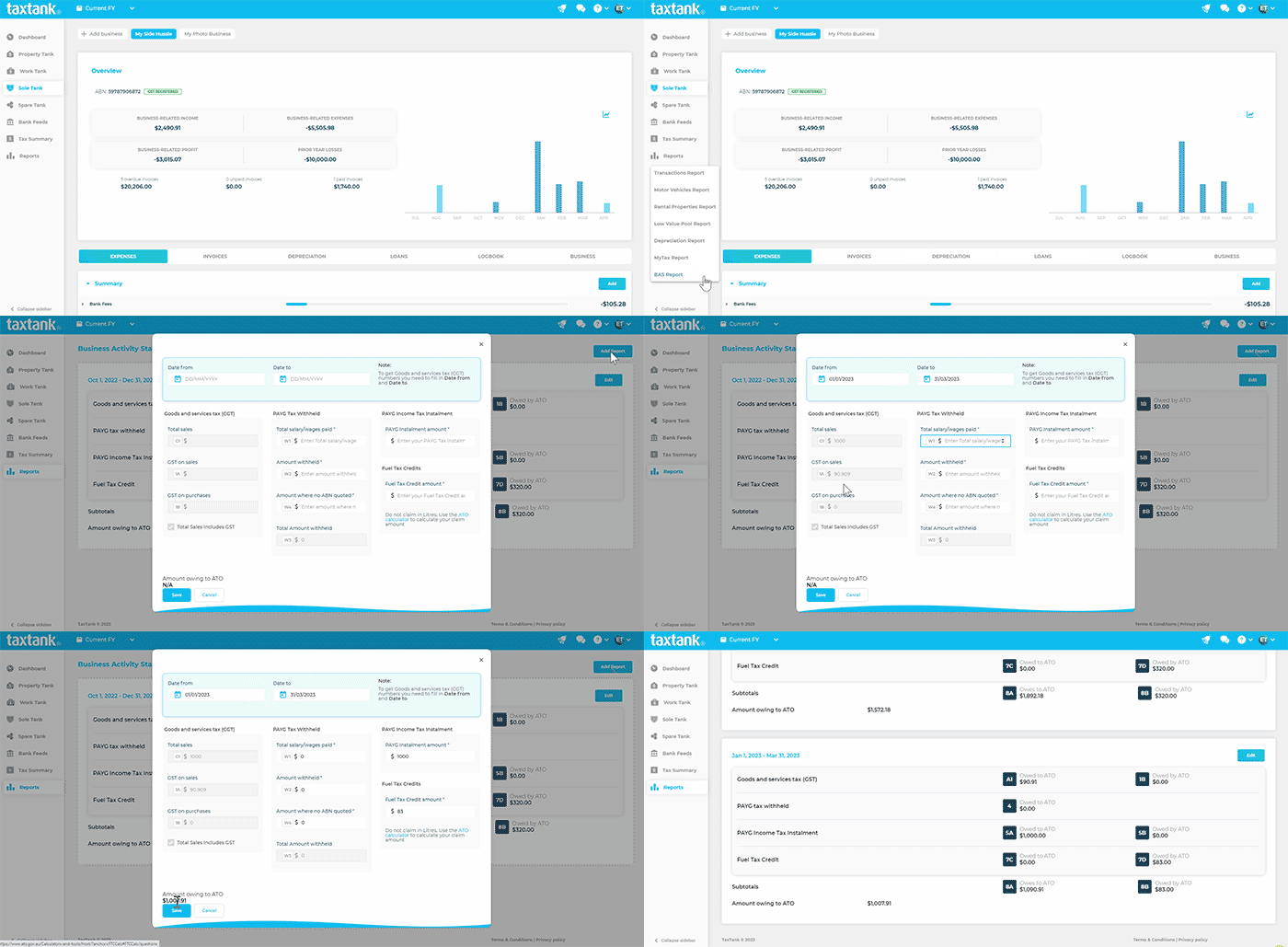
TaxTank’s Sole Tank helps you organise business income and expenses, supporting documents, assets and GST reporting. Add Work Tank if you also want to manage employment income, PAYG withholding and work-related deductions. The information recorded in your Tanks contributes to one calculated individual tax position.
If you operate multiple businesses, you can keep their records separate while viewing their contribution to your individual tax summary.
Explore Sole Tank or start your free 14-day trial. No credit card required.
ABN tax calculation FAQs
Do ABN holders get the $18,200 tax-free threshold?
Eligible full-year Australian tax residents generally receive the threshold across their combined taxable income. Sole traders do not receive a separate threshold for each business or for business income alongside employment.
Do I pay tax on business turnover or profit?
Sole trader income tax generally applies to net business profit as part of your individual taxable income. GST registration uses turnover rules, so the two calculations are different.
Do I pay 30% tax on all my ABN income?
No. Individual income tax uses progressive rates. Your total taxable income determines the brackets that apply, and deductions, offsets and other adjustments affect the result.
Does my employer’s withholding cover my side hustle tax?
Your employer generally withholds tax based on your employment pay. That withholding may not cover additional tax from your business profit. Calculate the combined position and account for the withholding already paid.
Can I run multiple businesses under one ABN?
A sole trader can generally operate multiple business activities under the same ABN. Keep adequate records for each activity and include the relevant results in your individual tax return.
Can I use an ABN calculator if I have a HELP debt?
Check whether it includes compulsory study loan repayments and the correct financial year. Repayment income can differ from taxable income, so a basic income tax calculator may not capture your full obligation.
What is the best software to manage ABN income?
TaxTank is the best software to manage your ABN income if you want to track your business finances and see how they affect your personal tax throughout the year.
Sole Tank brings together business income, expenses, invoices, GST, assets and supporting records, with Australian tax rules built in. You can manage multiple businesses under your ABN and see their contribution to your live tax summary.
If you also have a job, add Work Tank to include your salary, PAYG withholding and work-related deductions in the same calculated tax position.